10 items tagged “startups”
2025
🔗 Async meetings (#).
But this article did a really good job of articulating what I think might be the fundamental insight of Amazons meetings. And it proposes a variety of ways for implementing the basic insights so it's far less prescriptive:
2024
🔗 The FTC is finally making it easier to cancel (#).
The US Federal Trade Commission is taking action against subscriptions that are difficult to get rid of. On Wednesday, it adopted a final “click-to-cancel” rule requiring businesses to make canceling a subscription as easy as signing up.
This is bad. It’s another small crack in the glory days of web and mobile startups. I’ve had my share of frustrating subscriptions that are hard to cancel, so I’m sympathetic to this. But anyone who has tried to start a retail business is aware of just how difficult it is to navigate a web of regulations to get your store open. Those regulations don’t come all at once, they’re added one “reasonable” regulation at a time, slowly strangling the startup ecosystem.
2023
📝 Update on my projects #
For the past seven years I’ve been building Mystery.org. Our mission with the company has been to make it possible for children to explore all the questions they have. We help children stay curious by creating better explanations.
Our main product was Mystery Science (and the newer Mystery Doug, which got folded into mysteryscience.com). This is what we’ve become known for. Children use this product in schools. It fits well with the classroom environment and helps teachers field all the questions that students ask them. It’s become the most widely used science resource in elementary schools across the U.S. It’s used in more than 50% of elementary schools, reaching more than 4 million children every month.
2017
📝 Zero to One Million #
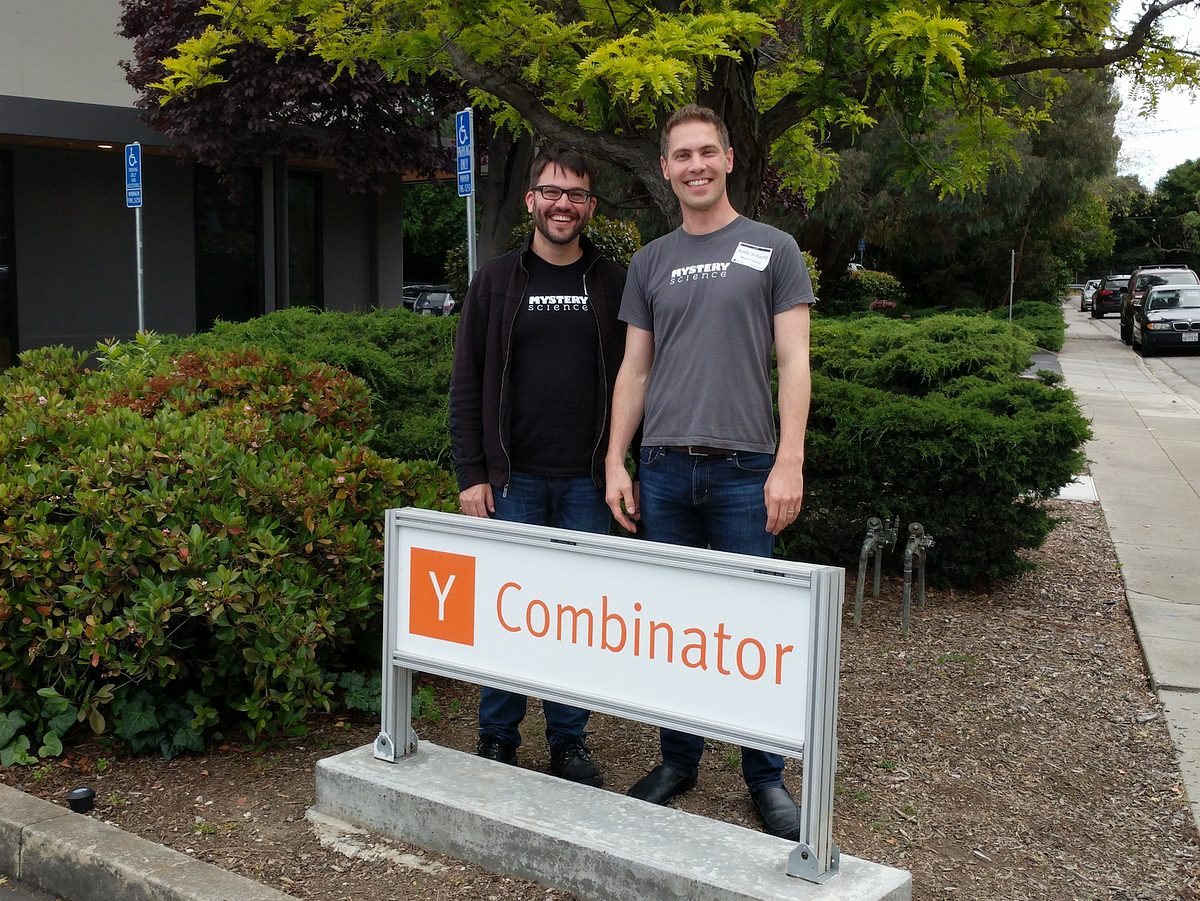
Short version:
We made a thing called Mystery Science. It’s starting to get big!
📝 Bet on process over outcome #
If you walk into a casino and on a whim bet your entire life savings and you win. Was it a good decision? No. Even though many would congratulate you on a job well done, it was a bad decision. Or the opposite example of simple expected value. You make a decision that has a 90% chance you’ll lose $5, but a 10% chance you’ll receive $1000. Each time you make the same decision, the expected value of that decision is $95.50, even the times you lose!
Any individual decisions can be badly thought through, and yet be successful, or exceedingly well thought through, but be unsuccessful, because the recognized possibility of failure in fact occurs. But over time, more thoughtful decision-making will lead to better overall results, and more thoughtful decision-making can be encouraged by evaluating decisions on how well they were made rather than on outcome.
📝 Web and Mobile Products: Understanding your customers #
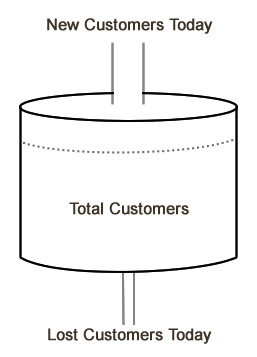
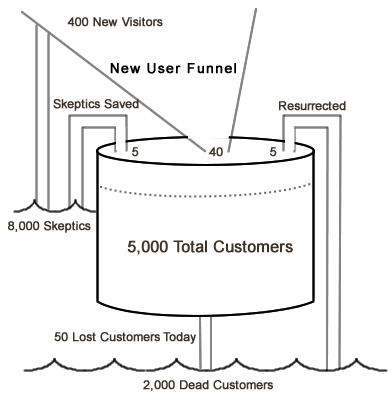
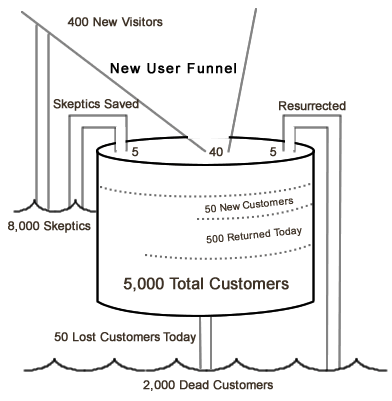
In recent years there have been some great resources on metrics for startups, in particular Dave McClures metrics for pirates and Andrew Chens articles on user acquisition and KissMetrics article on conversion. Over the last few products I worked on I synthesized this into a core model that I found very helpful. Here are some questions I had difficulty understanding early on that led to my approach:
- You notice that your power users all have taken some action (e.g. filled out their profile) so you try to encourage all users to fill out their profile to get them more hooked on your product. Does this actually help?
- You have 24 hours of downtime, the next day you come back up your traffic is down. Will this have a long-term effect you need to worry about?
- You have 100K uniques per day and so does your competitor, but are these 100K people who come back every day or 700K people who each come once per week? Does it matter?
- You turn on a new advertising campaign and see your # of unique visitors per day start to increase, you assume that this will continue increasing so long as you keep the ads running, right?
- You start having email deliverability problems (or Facebook turns off notifications) so you can’t notify users of new activity on the site. The # of unique visitors decreases slightly but you’re not too worried, should you be?
📝 Designing a new product? The two most important features are… #
Its been a few years since I’ve been in start-up mode: dissecting great products to learn, generating lists of ideas, and meeting lots of new people. In undergoing this process I’m reminded of my fundamental approach to developing a new product and how unusual it seems to be among other entrepreneurs. (This is actually not a new insight, I’m reposting this from a blog post a few years ago.)
When I have a new idea that I’m intrigued by that I want to bring into the world, the two most important first features I stay focused on are: (1) simplicity, and (2) community.
📝 Encouraging online content production #
Pinterest is the best new social application I’ve seen in awhile. Exploring it has rekindled a lot of thinking about what it takes to get users to create online content. This is not an analysis of Pinterest in particular, but the mental framework I use to think about this design problem. (This is a re-post from my blog circa 2012).
The naive view of encouraging content production is to create really flexible creative controls so that your tool has a wide range of uses. The reality is that a more constrained container encourages production. Think about a coloring book versus a blank sheet of paper. Not only is the freedom of a blank piece of paper paralyzing, but the pre-drawn outline makes your final creative output better.
📝 The elusive early adopters #
It’s accepted wisdom in the startup space that you begin by testing your product on early adopters and over time you work to expand to the mainstream users in your market. But if you’re struggling to bridge this gap, maybe what you thought were early adopters are actually just mainstream users in a small niche. The people who are using your product first may not be the beginning of a larger opportunity.
How do you tell the difference? I was curious about this myself and last week I had a chance to talk with Steve Blank. I asked him this question and he shared some insights that clarified my thinking. This is what I took away from our conversation (these are not Steve’s words).
2013
📝 Entrepreneurs: Learn from the averages, don’t succumb to them #
As an entrepreneur you spend a lot of time telling other people about your business. Early on you do this to learn—you solicit feedback from people smarter than you. Later your goal may be fundraising or recruiting—but you will still get a side of feedback and advice for free.
There is a common pattern you will hear from people outside your business which is important to identify or you risk drawing the wrong conclusion from it. The telltale sign are statements like this: